
Pathways That Handle South Florida Traffic
Walkway Installation in Jupiter for properties where drainage and surface stability determine long-term performance
Jupiter's housing stock includes a mix of single-family homes from the 1980s and 1990s alongside newer coastal developments, many built on sandy or coral-based substrates that shift under poorly supported hardscaping. Palm Beach Contracting Services installs walkways designed to remain level and functional in these conditions, addressing the underlying substrate preparation that prevents cracking and settling. You'll notice the difference in how water moves off the surface and how the pathway holds its position through seasonal use.
The installation begins with excavation to the depth required for your soil type and intended use, followed by compacted base layers that distribute weight evenly and prevent future movement. Material selection depends on your property's exposure, the volume of foot traffic, and the drainage pattern surrounding the pathway. Pavers, stamped concrete, and natural stone each respond differently to the sandy conditions common in this area, and the choice affects how quickly water drains away and how the surface ages over time.
Schedule a property evaluation to determine the substrate conditions and drainage slope required for your site.
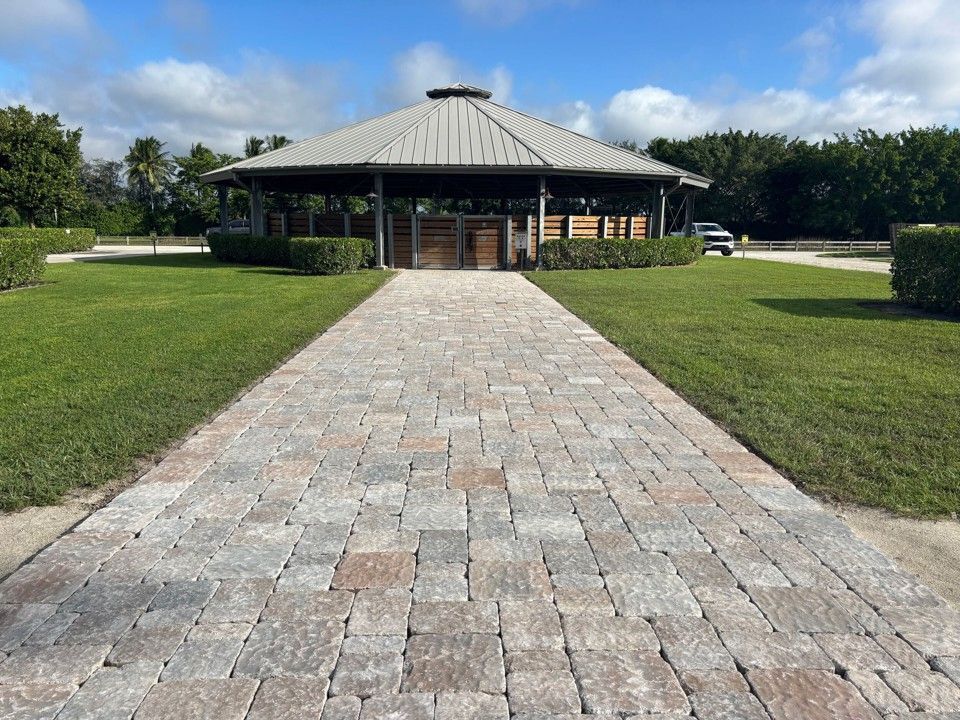
What Proper Base Preparation Accomplishes
Base preparation involves removing organic material, compacting the native soil, and adding layers of gravel or crushed stone to create a stable platform that resists shifting. The depth and composition of this base depend on whether the walkway connects to a pool deck, runs through landscaped areas, or bridges sections with different soil densities. Palm Beach Contracting Services adjusts the compaction method and material thickness based on what the site assessment reveals about load distribution and water movement.
Once the installation is complete, you'll see defined edges that keep the pathway separated from planted areas, a surface that sheds water toward planned drainage points rather than pooling, and materials that remain level without lippage or rocking underfoot. The transition between the walkway and adjacent surfaces appears intentional and finished, not as an afterthought.
Drainage integration includes grading the walkway to direct water away from structures and into swales or catch basins, preventing runoff from undermining the base or collecting along the edges. The installation also accounts for how irrigation systems interact with the pathway, ensuring sprinkler zones don't saturate the base layers over time.
Questions Before Starting Your Project
Property owners in Jupiter often ask about material performance and installation requirements before committing to a walkway design, particularly when working with sandy soils and variable drainage conditions.
- What determines the depth of excavation required for a walkway? The depth depends on your soil type, the weight the walkway will support, and whether the surrounding area drains properly, with sandy substrates in Jupiter typically requiring deeper base layers to prevent settling.
- How does material choice affect drainage performance? Pavers with joint spacing allow water to permeate between units, while solid concrete surfaces require slope and edge drains to move water off the pathway, and the choice depends on your site's existing drainage pattern.
- What happens if the walkway intersects an existing irrigation system? Irrigation lines are located and either rerouted or protected during excavation, and sprinkler head placement is adjusted so water doesn't concentrate along the walkway edges or saturate the base material.
- How is the walkway edge secured to prevent lateral movement? Edge restraints such as concrete curbing, aluminum edging, or soldier courses are installed along the perimeter and anchored into the compacted base to hold the pathway in position as the ground expands and contracts.
- What should you check once the installation is finished? Walk the entire length to confirm the surface is level without rocking pavers or low spots where water might collect, and verify that drainage flows away from structures and toward designated outlets.
Palm Beach Contracting Services provides material samples and site-specific recommendations based on your property's substrate and drainage conditions. Request a detailed estimate that includes base preparation, material specifications, and drainage integration for your walkway project.


