Paver & Hardscape Services in Palm Beach County
Plan an outdoor space that works for Florida weather
From a new paver driveway to a pool deck designed for everyday use, the right hardscape project should fit your property, manage water well, and hold up to South Florida’s sun, rain, humidity, and coastal conditions. Palm Beach Contracting Services helps homeowners across Palm Beach Gardens, Jupiter, Wellington, West Palm Beach, Boca Raton, and nearby Palm Beach County communities plan paver and hardscape projects around how they use their homes.
Not sure which service fits your project? Start with the surface or problem you want to address. A driveway, pool deck, walkway, patio, retaining wall, and larger outdoor living project each have different design, drainage, access, and material considerations. We can review the space, discuss options, and explain what the project involves before you decide how to move forward.
Request a project consultation to discuss your property, priorities, and estimate.
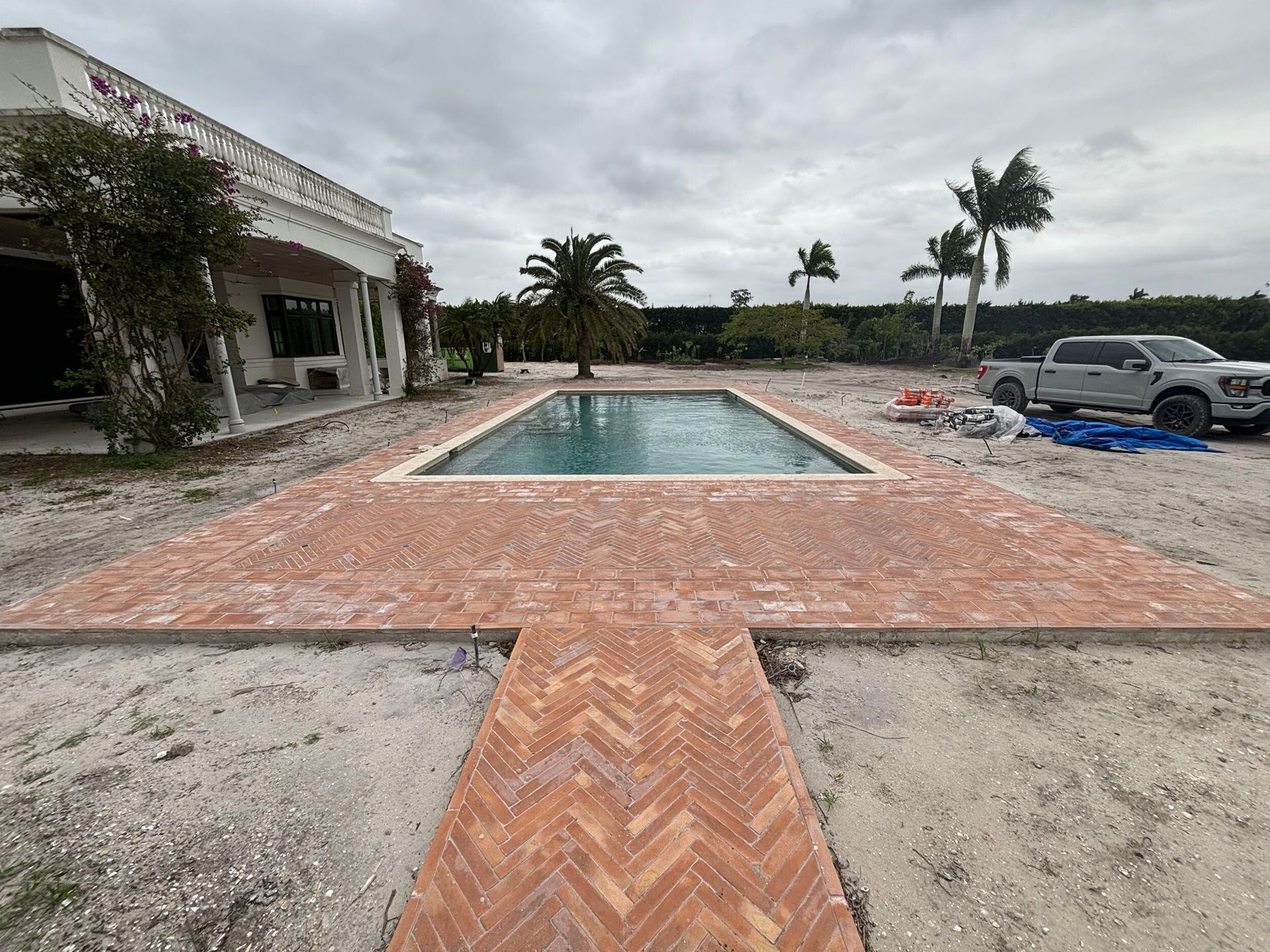
How Florida’s weather should affect your project
South Florida’s climate makes planning and installation details especially important. Heavy rain can expose poor grading or drainage. Strong sun and heat affect how outdoor surfaces feel and how materials age. Humidity and damp, shaded areas can encourage algae or mildew, while coastal properties may face salt exposure. The conditions at your property—and the way you use the space—should guide material and layout decisions.
Before work begins, ask the contractor to explain:
- Drainage and slope: Where will rain and wash water go? How will the finished surface direct water away from the house, pool, and neighboring areas?
- Base preparation: What excavation and base preparation does this site require? How will the base be compacted and checked before pavers are installed?
- Pool-area safety: Which surface options are appropriate for wet foot traffic? How will the pool edge, coping, and deck transitions be handled?
- Heat and exposure: How might color, finish, shade, and surface material affect comfort in direct sun?
- Coastal conditions: If the property is near the coast, what maintenance or material considerations apply to salt exposure?
- Water management behind walls: What drainage provisions are planned so water does not build up behind a retaining wall?
- Maintenance: What routine cleaning is appropriate? Is sealing recommended for the selected product, and what are its benefits, limits, and upkeep requirements?
Avoid relying on a broad promise such as “maintenance-free” or “will never shift.” Ask what affects long-term performance and what maintenance the selected materials require.
How to choose a paver contractor
Compare contractors based on the clarity of their site assessment, written scope, preparation plan, and communication—not only the final price. A useful estimate should make it possible to understand what is included and how the work will be carried out.
Questions to ask before hiring
Which materials are you proposing?
Get the product or material name, color, finish, pattern, availability, and any care instructions in writing.
How will water move after installation?
Ask the contractor to explain the planned slope and drainage in plain language.
What preparation is included?
Ask about demolition or removal, excavation, base materials, compaction, grading, edge restraints, and cleanup.
Will you inspect the property before giving a final proposal?
Site access, slopes, existing surfaces, drainage, utilities, and delivery access can change the work required.
What is excluded from the estimate?
Clarify permits, HOA approvals, disposal, irrigation repairs, drainage changes, sealing, coping, and landscaping restoration.
Who handles approvals and inspections?
Confirm which permits or association approvals may apply and who is responsible for each step.
What is the schedule and payment plan?
Get the expected start window, work sequence, payment milestones, and process for weather delays in writing.
Can I see comparable completed projects?
Ask for examples of the same project type and, where possible, similar site conditions.
Warning signs to watch for
- A price is offered without understanding the site or project details.
- The proposal gives little detail about excavation, base preparation, drainage, materials, or cleanup.
- The contractor cannot explain where runoff will go.
- The estimate is unusually vague about what is included or excluded.
- You are pressured to sign immediately or make a large payment before the scope and terms are clear.
- The contractor promises a surface will never shift, stain, grow weeds, or need maintenance.
- The contractor avoids written answers about schedule changes, permits, insurance, or responsibility for the work.
Details homeowners sometimes overlook
The visible pavers are only one part of a successful project. During planning, also consider:
- Door and threshold heights: A new patio or pool deck changes the finished surface height and may affect transitions at doors and sliders.
- Drainage near the home: Confirm that the finished grade will not send water toward the foundation, garage, or enclosed areas.
- Pool coping and transitions: Decide how the deck meets the pool edge and connects to adjoining surfaces before installation starts.
- Access for installation: Tight side yards, gates, landscaping, and equipment access can affect the work sequence and estimate.
- Underground lines and irrigation: Identify sprinklers, lighting wires, drainage lines, and utilities before excavation.
- Furniture and future features: Plan for grills, outdoor kitchens, shade structures, lighting, and seating before finalizing the layout, even if those features will be added later.
- Paver repairs and future matching: Ask whether extra pavers can be retained and how repairs would be handled if a section needs attention later.
- Maintenance expectations: Get product-specific cleaning and sealing guidance rather than assuming every paver needs the same treatment.
- HOA and local approvals:
Confirm design rules, access hours, color requirements, and permit responsibilities before scheduling.
What to expect from the project process
1. Discuss the goal
Describe what you want to improve, how you plan to use the space, and any concerns such as standing water, uneven surfaces, pool access, or vehicle traffic.
2. Review the property
The contractor should consider dimensions, elevations, existing surfaces, drainage patterns, access, and nearby features that may affect installation.
3. Compare the scope and materials
Review the proposed layout, materials, preparation, drainage approach, project exclusions, estimated schedule, and payment terms before approving the work.
4. Prepare and install
The work may include removal, excavation, base preparation, grading, edge restraint installation, paver placement, joint finishing, and cleanup. The exact steps depend on the project and site.
5. Review completion and care
Walk the finished area with the contractor, ask about any care instructions, and keep the product and project details for future maintenance or repairs.
Frequently asked questions
How do I know whether I need a driveway, patio, pool deck, or walkway contractor?
Start with the main surface you want installed or improved. Driveways need to account for vehicle use, pool decks for wet foot traffic and pool transitions, patios for how you use the outdoor area, and walkways for safe, convenient routes. A contractor who handles paver installation can help assess connected surfaces and explain whether the work should be planned together.
What matters most when installing pavers in South Florida?
The site preparation, grading, drainage, and material selection should fit the property and project. Heavy rain, heat, humidity, and—near the coast—salt exposure can affect the surface and its upkeep. Ask the contractor to explain the plan for your specific site rather than relying on a generic material or installation promise.
Are pavers a good choice for a pool deck?
They can be a suitable option, depending on the selected surface, installation, and pool area. Compare texture, color, comfort in direct sun, drainage, maintenance, and how the deck will meet the pool coping. Ask for material recommendations intended for the conditions where they will be installed.
How can I tell if a paver installation estimate is complete?
Look for a written scope that identifies the project area, materials, removal, excavation, base preparation, grading and drainage, edge restraints, joint finishing, cleanup, exclusions, schedule, and payment terms. Ask for clarification on any item that is missing or unclear.
Do I need to seal pavers?
That depends on the paver product, the desired appearance, site conditions, and manufacturer guidance. Ask whether sealing is recommended, what it changes, how often it may need attention, and what cleaning or preparation is required first.
What should I ask about drainage before work begins?
Ask where water will flow after installation, how the finished slope will be set, whether existing drains need changes, and how the plan protects the house, pool area, and neighboring property. The answer should be specific to your site.
How long does paver installation take?
Timing depends on project size, site preparation, material availability, access, weather, and any approvals required. Ask for an estimated schedule and how rain or unexpected site conditions could affect it.
Do I need HOA approval or a permit?
Requirements depend on the community, project scope, and local rules. Check with your HOA and ask the contractor which approvals or permits may apply and who will obtain them before work begins.
What areas does Palm Beach Contracting Services serve?
Palm Beach Contracting Services lists Palm Beach Gardens, Jupiter, Palm Beach, Wellington, West Palm Beach, Boca Raton, Delray Beach, Royal Palm Beach, Lake Worth, and Boynton Beach among its service areas. Contact the team to confirm availability for your property.
Request an estimate
Tell us what you want to build or improve, where the property is located, and what you need the space to do. Palm Beach Contracting Services can discuss the site, service options, and next steps for a paver or hardscape estimate in Palm Beach County.


